

2024 Summer Opening
We are open
Monday through till Friday,
between 9:30 am and 3 pm,
until Thursday October 31st
We are closed on local public holidays
If you have any queries, please email us at info@guernseytapestry.org.gg and we will do our best to help.
Entrance Fee
Adults £6.00
Children Under 16 Free
The entrance fee includes an audio guide which will add to your appreciation of each panel.
The guide is available in English, French, German or Dutch.
Sorry, but we will be closed on all public holidays.
THE BAILIWICK OF GUERNSEY MILLENNIUM TAPESTRY
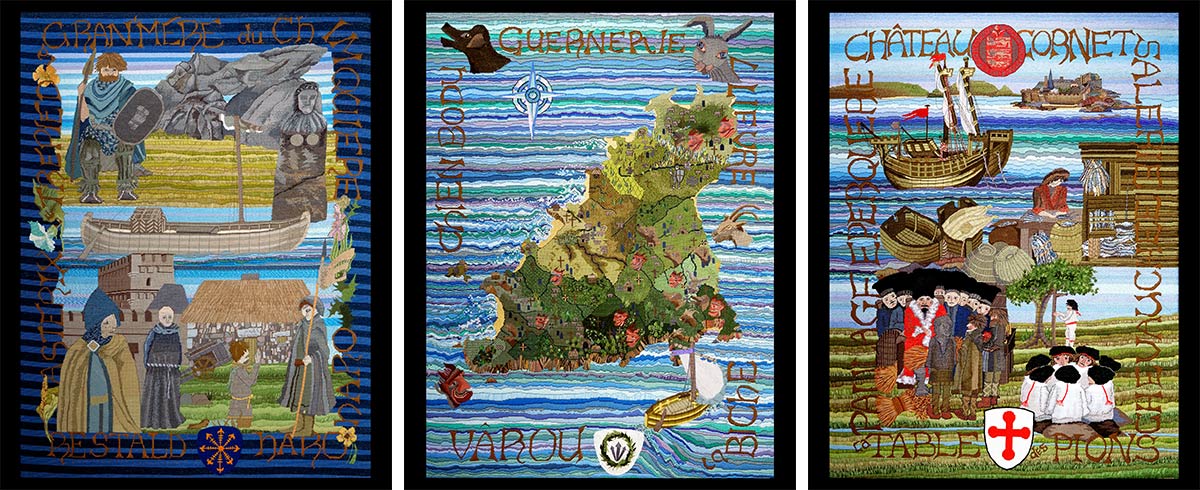
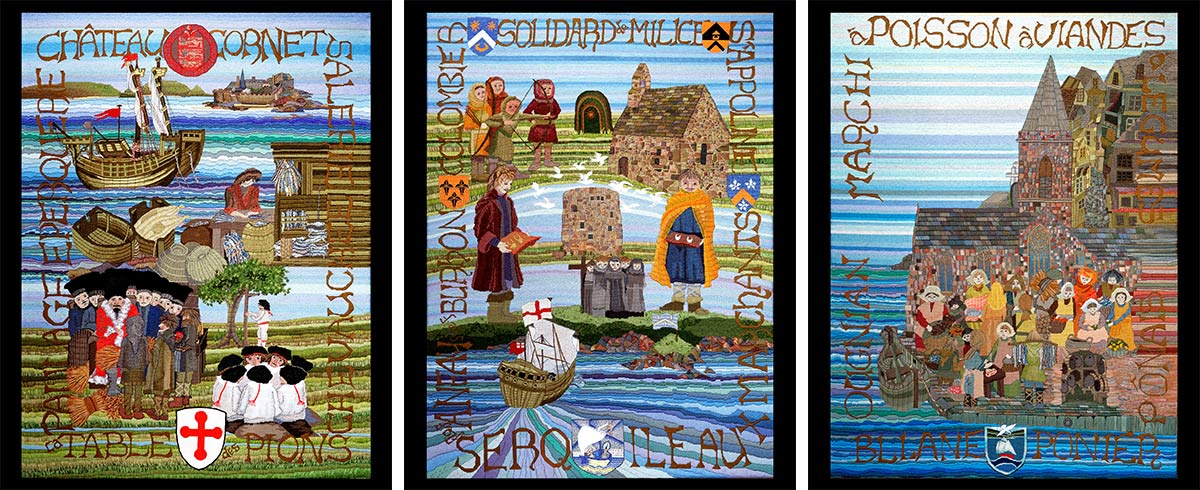
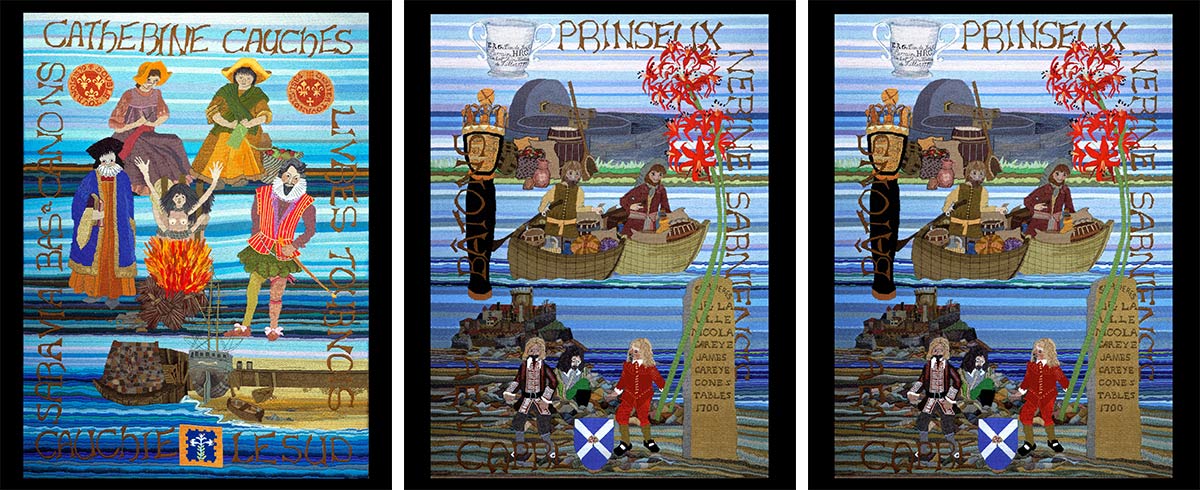
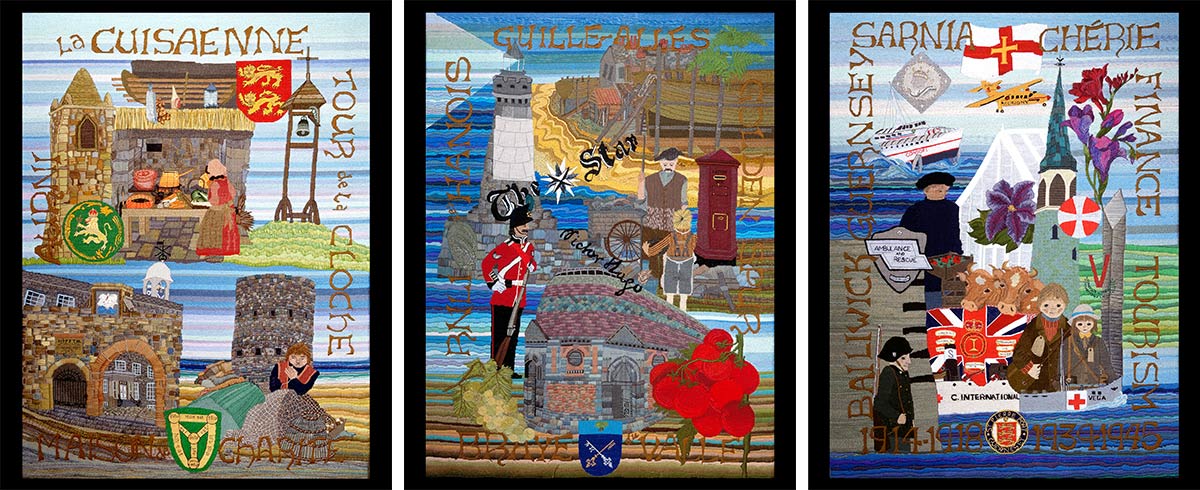
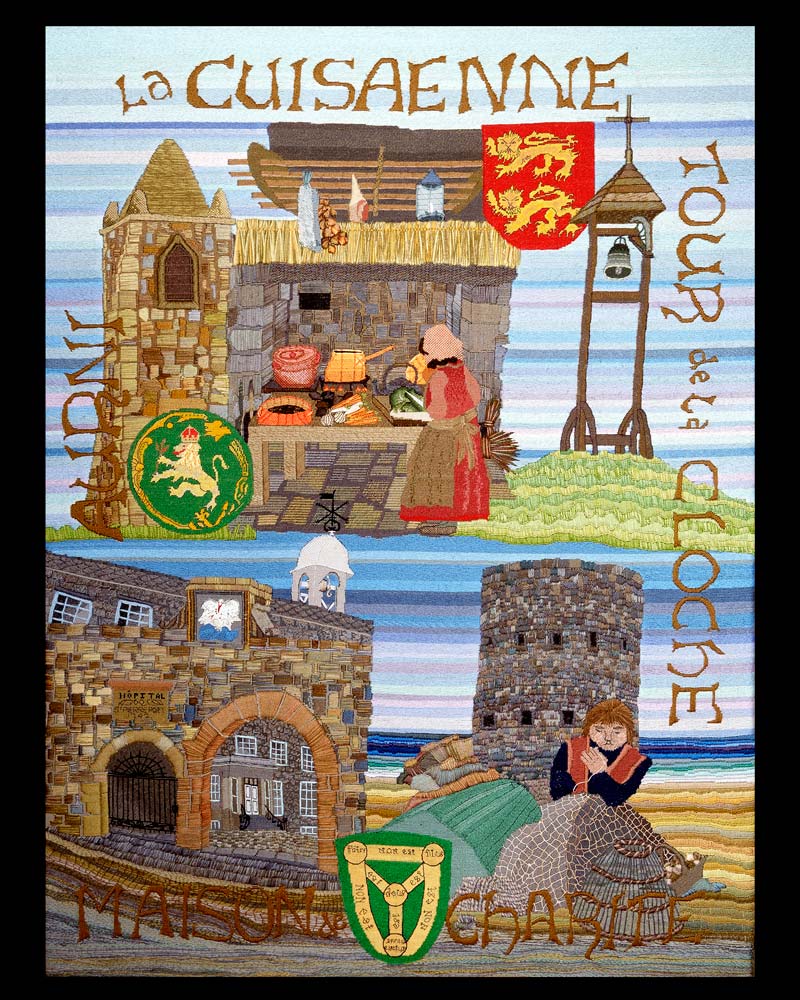
The Guernsey Tapestry Gallery houses The Bailiwick of Guernsey Millennium Tapestry, a project that involved the whole community. It illustrates 1000 years of local history in ten panels of embroidered canvas work, each panel covering one century. The original aim of the project was to provide a lasting reminder of the Millennium celebrations, involve the whole community and encourage people to look more deeply in to the Island’s history. The panels were stitched by the residents of the Bailiwick with each one bearing the crest of the parish that stitched it. The story in each panel is brought to life by an audio guide which is available in English, French and German. The Gallery provides a permanent home for the Tapestry where it is preserved and displayed for the enjoyment of all.
In the gift shop you will find unique gifts, souvenirs, inspirational embroidery books and yarns.
THE BAILIWICK OF GUERNSEY MILLENNIUM TAPESTRY
The Gallery is situated on the lower floor of the Dorey Centre and may be accessed from St James Street by external steps (opposite the Court Buildings main door) or via the entrance to the Dorey Centre in St James Street by stairs or lift.
Please note that, on occasion during Tapestry opening hours, the St James's front door may be locked. If disabled access is required on these occasions, please call the Gallery on 01481 727106.
For parking availability please call the Gallery in advance.
Liberation Day
The gallery will be closed for Liberation Day and other Bank Holidays
2024 Summer Opening
We are open
Monday through to Friday
between 9:30 am and 3 pm
Please note: we are closed on local public holidays
(We will be closed for the winter, our lasy day will be Thursday 31st of October)
Any queries or questions, please email us on info@guernseytapestry.org.gg
Admission is £6 but children under 16 are free.
If you are a large group (over ten adults) you will benefit from a reduced entrance fee (£5.50).